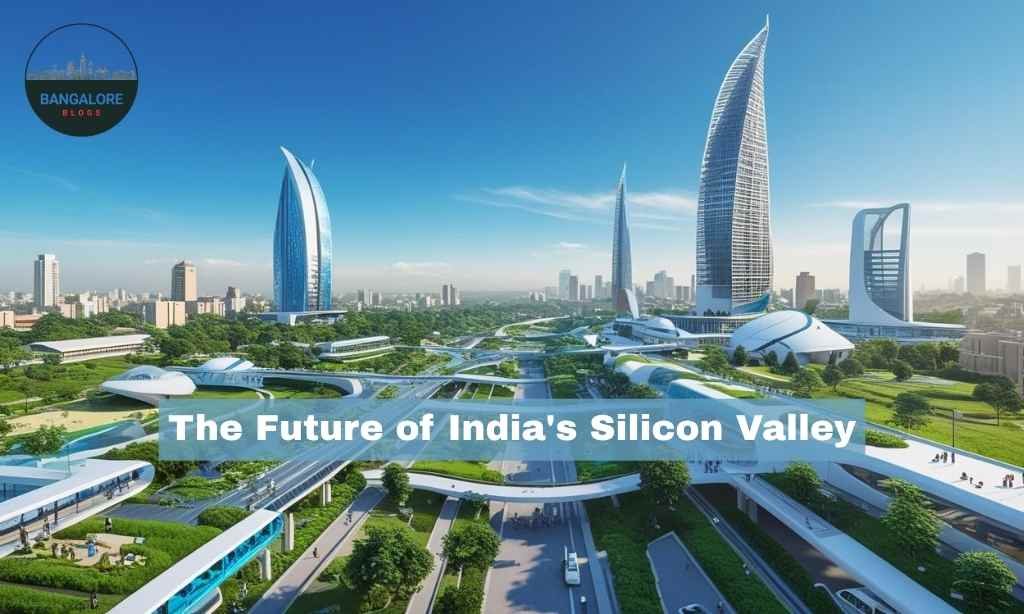
Quick answer: What will Bangalore look like in 2030?
By 2030, Bangalore is projected to have a metro network exceeding 175 km (Phase 3 complete, including airport connection), a population of 15+ million, GDP contribution exceeding $150 billion, and continued dominance as India's primary technology hub. The major uncertainties: water security (the city's dependence on the Cauvery River), infrastructure overload (roads, sewage), and whether the AI/deep-tech sector emerges as a genuine counterweight to IT services.
What the Data Currently Shows
Bangalore's trajectory through 2026 offers evidence for both optimism and concern about 2030.
On the technology side: the city added more AI research centres, semiconductor design offices, and deep-tech startups between 2022 and 2026 than any preceding five-year period. Intel, Qualcomm, Texas Instruments (full circle), and Samsung all expanded their Bangalore engineering operations. The AI lab concentration — Google DeepMind India, Microsoft AI, and multiple well-funded Indian AI startups — positions the city well for whatever the next decade's technology transition involves.
On the infrastructure side: the Namma Metro Phase 3 expansion, if on schedule, will add the airport connection and several important residential corridors that currently have no rail access. The BBMP's lake restoration program has made genuine progress, and water recycling infrastructure is being built at a pace that wasn't visible five years ago.
The Technology Transition: From IT Services to Deep Tech
The defining question for Bangalore's 2030 position is whether the city successfully transitions from IT services outsourcing (its identity from 1990 to 2020) to deep technology creation. The indicators in 2026 are mixed.
Positive signals: The semiconductor design cluster (50+ companies doing chip design in Bangalore, including Intel, Qualcomm, Texas Instruments, and Arm India) represents genuine deep technology work that's harder to commoditise than software services. The AI research output from IISc Bangalore and from corporate AI labs is increasing. Space technology (ISRO, and now private space companies like Skyroot Aerospace and Agnikul Cosmos working alongside ISRO) is a Bangalore-native sector.
Cautious signals: Most of India's globally successful startup exits through 2026 (Flipkart, PhonePe, Razorpay) created business model innovation rather than deep technology innovation. India's global patent output remains low relative to its software talent base. The transition to deep tech requires longer investment cycles than services — and Indian venture capital is still primarily oriented toward faster return cycles.
Infrastructure: What 2030 Requires
The gaps between Bangalore's current infrastructure and 2030's requirements are known and largely unresolved.
Water: Bangalore receives its water primarily from the Cauvery River via a 100-km pipeline system. The city is already in a structural water deficit — population growth without proportional water infrastructure investment will create acute shortages by 2030. The lake restoration program and wastewater recycling projects are necessary but not yet sufficient.
Metro: Phase 3 (airport connection + residential extensions) is under construction with a target completion around 2027–2028. If achieved, it significantly reduces the airport-transit problem and provides rail access to currently unserved corridors (Hebbal to airport, Bommasandra on Electronic City side).
Roads: The Peripheral Ring Road (PRR) and the Steel Flyover projects are intended to redistribute traffic away from the Inner Ring Road. Both have faced delays; the PRR is the higher-impact of the two if completed.
What Stays the Same
Bangalore's foundational advantages — the engineering talent base, the ISRO-HAL-BHEL public sector heritage, the university research output from IISc and the IITs, the startup culture built through 30 years of successful companies, and the climate — don't change by 2030. These are structural advantages built over decades that no other Indian city is close to replicating.
The city will remain India's primary technology address in 2030. The debate is whether it will be a significantly better city to live in, or whether the infrastructure deficits accumulate faster than the solutions arrive. For the longer view of how the city got here, see how Bangalore became India's Silicon City.
Frequently Asked Questions
Will Bangalore have a metro to the airport by 2030?
Phase 3 of the Namma Metro includes an airport connection targeting completion around 2027–2028, which would place it operational before 2030. However, Bangalore metro expansion has historically experienced 2–4 year delays from announced timelines. The airport connection is high priority and well-funded; whether it arrives in 2028 or 2030 is the live question.
What is Bangalore's projected population in 2030?
Current estimates place Bangalore's population at approximately 13–14 million in 2026. By 2030, projections range from 14.5–16 million depending on migration rates and urban boundary definitions. This would make it the third-largest city in India after Delhi and Mumbai.
Will Bangalore remain India's Silicon City in 2030?
Yes — no other Indian city has the combination of talent, capital, infrastructure, and institutional momentum to displace Bangalore as India's primary technology hub by 2030. Hyderabad is the closest competitor and growing faster in some metrics, but the gap in startup ecosystem depth, VC concentration, and engineering talent density remains significant.