
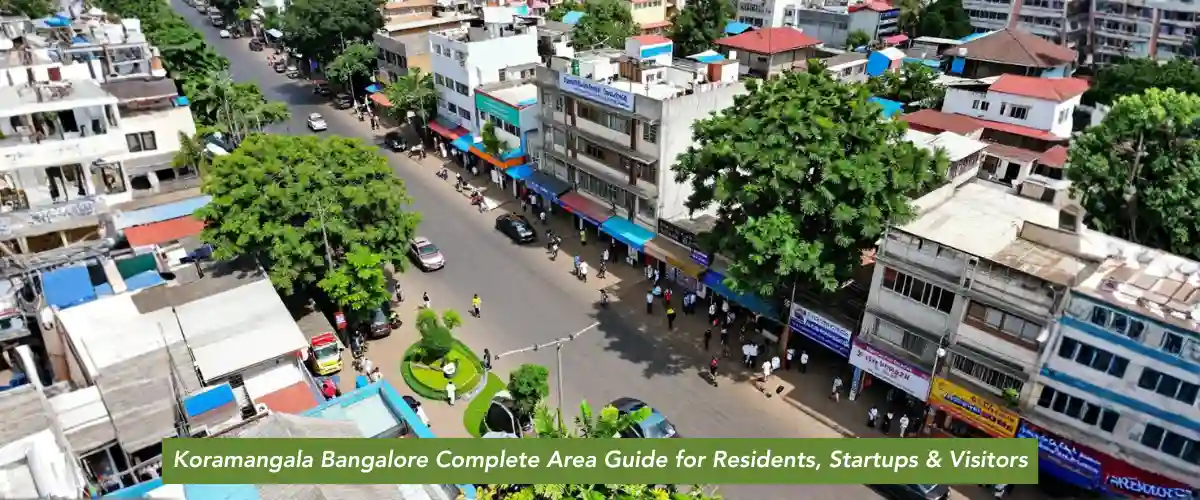
Quick answer: Koramangala is Bangalore’s startup capital and most talked-about neighbourhood – the birthplace of Flipkart, Swiggy, BigBasket, and dozens of India’s biggest tech companies. The 4th and 5th Blocks on 80 Feet Road and 100 Feet Road have the best restaurants, cafes, and nightlife. Rent for a 1 BHK: ₹22,000–₹35,000/month. Best for: young professionals, startup founders, and anyone who wants to be at the centre of Bangalore’s energy.
Koramangala is not just a neighbourhood it is a state of mind. If you have spent any time in Bangalore’s tech and startup ecosystem, you have likely heard the phrase ‘Koramangala address’ used as shorthand for legitimacy. There is a reason for this: more Indian startup unicorns were founded in Koramangala than in any other neighbourhood in any other Indian city. The area’s combination of excellent roads, good housing stock, proximity to IT parks and IIM Bangalore, and a restaurant and café scene that rivals Indiranagar has made it the aspirational address for Bangalore’s generation of builders and creators.
I have worked with and covered dozens of Bangalore startups and businesses over the years, many of them based in Koramangala. This guide gives you an honest, current picture of what the area is genuinely like to live and work in.
Why Koramangala is India’s Startup Capital
The origin story of Koramangala’s startup dominance is partly accidental and partly practical. When Sachin Bansal and Binny Bansal founded Flipkart from a small apartment in Koramangala’s 4th Block in 2007, the neighbourhood’s infrastructure — good roads, reliable internet, affordable office space, and proximity to IIM Bangalore’s talent made it the natural choice. Flipkart’s success attracted other founders, investors, and talent to the area, and a network effect took hold.
Today, Koramangala has been or is home to the founding or early operations of Flipkart, Swiggy, BigBasket, Ola, Cure.fit, Myntra, and dozens of Series A and B startups. The density of venture capital firms, accelerators, and co-working spaces in Koramangala is higher than in any other residential neighbourhood in South India.
- Flipkart: Founded in Koramangala 4th Block (2007) — now India’s largest e-commerce company
- Swiggy: Founded in Koramangala (2014) — India’s leading food delivery platform
- BigBasket: Founded in Koramangala — India’s largest online grocery
- Ola Cabs: Early base in Koramangala before expansion
Insider tip: The coffee shop at the corner of Koramangala 5th Block’s 80 Feet Road has been nicknamed ‘the most funded coffee shop in India’ by the startup community — on any weekday morning, you are likely sharing space with founders raising their Series A.
Living in Koramangala Rents, Blocks & What to Expect

Which Block Should You Live In?
- 4th Block: Most vibrant Forum Mall, restaurants, cafes, pubs on 80 Feet Road. Noisier but central to everything.
- 5th Block: Premium residential + commercial mix. Excellent restaurants on 100 Feet Road corridor.
- 1st and 2nd Blocks: Quieter, more residential, slightly lower rent. Less nightlife noise.
- 7th Block: Near Sony World Signal, good connectivity, popular with startups and young professionals.
- 8th Block: Near Forum Value Mall, more laid-back than 4th/5th Block, slightly lower rent.
Related content: shopping malls in bangalore
Rent Prices in Koramangala 2026
- 1 BHK (budget): ₹18,000–₹25,000/month (older buildings, 2nd or 8th Block)
- 1 BHK (mid-range): ₹25,000–₹35,000/month (newer buildings, 4th or 5th Block)
- 2 BHK: ₹35,000–₹55,000/month
- 3 BHK: ₹55,000–₹90,000/month
- Security deposit: 10 months rent typically — plan for ₹2.5–₹3.5 lakh upfront for a mid-range 1 BHK
Also read: living in bangalore
Best Restaurants and Cafes in Koramangala

Food
- Meghana Foods: the best Andhra-style chicken and mutton biryani in South Bangalore — enormous portions, loyal following
- Truffles (8th Main): Best burgers and pasta in Bangalore — always a queue, worth the wait
- Monkey Bar: Creative cocktails, inventive Indian tapas — one of Bangalore’s best gastropubs
- Forum Value Mall food court: 50+ options, useful for quick weekday lunches
- Brahmin’s Coffee Bar (nearby): Traditional South Indian breakfast — best idlis at under ₹100 for two
Cafes
- DYU Art Cafe: Art gallery meets café in a beautiful old Koramangala bungalow — best weekend brunch atmosphere
- Third Wave Coffee Roasters: Specialty coffee branch in Koramangala for serious coffee drinkers
- Taps Beerworks: Rotating craft beer taps — Koramangala’s best beer bar for variety
Connectivity — How well-connected is Koramangala?
- To Electronic City: 20–30 minutes via Hosur Road — Koramangala is popular for Electronic City workers
- To Indiranagar: 15–20 minutes — very common commute corridor
- To MG Road / CBD: 20–35 minutes depending on traffic
- To Whitefield: 35–50 minutes — avoid this commute in peak hours
- Metro access: Currently limited — nearest Purple/Green Line stations require a cab. Pink Line (under construction) will improve access significantly
- BMTC buses: Multiple routes are useful for Hosur Road corridor
One honest limitation of Koramangala: it does not have direct Namma Metro connectivity yet. The upcoming Pink Line will change this, but until then, most Koramangala residents rely on autos, bikes, or Ola/Uber. If you work somewhere metro-accessible and do not have a personal vehicle, factor this in when deciding.
Koramangala vs Indiranagar Which Should You Choose?
The most common choice Bangalore’s young professionals face is between Koramangala and Indiranagar. Both are premium, vibrant, well-served by restaurants and cafes. The key differences: Koramangala is startup-centric and more work-focused in its energy; Indiranagar is more social and entertainment-focused. Koramangala rents are slightly lower than Indiranagar’s on equivalent flats. Indiranagar has better metro access. If you work in the Whitefield or Electronic City corridor, Koramangala is better positioned. If you work in the CBD or North Bangalore, Indiranagar is better.
Frequently Asked Questions Koramangala Area Guide
Q1: What is Koramangala famous for in Bangalore?
Koramangala is Bangalore’s startup capital – the birthplace of Flipkart, Swiggy, and BigBasket. It is also one of Bangalore’s most vibrant neighbourhoods for restaurants, cafes, and nightlife, especially the 4th and 5th Blocks on 80 Feet Road.
Q2: Is Koramangala a good place to live in Bangalore?
Yes, for young professionals and startup founders – excellent restaurants, walkable streets, and good infrastructure. The main downside is cost: 1 BHK rents are ₹22,000–₹35,000/month. Limited metro access is the other drawback until the Pink Line opens.
Q3: Which block in Koramangala is best for living?
4th Block for maximum energy and restaurant access. 5th Block for a premium mix of residential and commercial. 1st and 2nd Blocks for quieter, more residential living. 7th Block for good connectivity at a slightly lower cost.
Q4: What are the best restaurants in Koramangala?
Meghana Foods (best Andhra biryani), Truffles (best burgers), Monkey Bar (gastropub), DYU Art Cafe (brunch in a bungalow), and Taps Beerworks (craft beer). Forum Value Mall’s food court for quick weekday lunches.
Q5: How far is Koramangala from Electronic City?
Approximately 20–30 minutes from Electronic City via Hosur Road (under normal traffic). This makes Koramangala a popular residential choice for Electronic City IT workers who want a vibrant neighbourhood to come home to.
Q6: Does Koramangala have Namma Metro access?
Currently limited — the nearest metro stations require a cab or auto ride from most parts of Koramangala. The upcoming Pink Line (expected 2026) will have stations serving the Koramangala corridor, significantly improving connectivity.